How to Know If Your Car Tyre Has a Puncture or Slow Air Leak
A slow leak and a puncture look almost identical from the driver's seat. Here are the signs Al Ain drivers should check before the tyre goes flat.

You can tell a puncture from a slow air leak by how fast the tyre loses pressure: a puncture drops 5-15 PSI within hours, while a slow leak loses 1-3 PSI per day and often takes a week to trigger the dashboard warning. Both feel identical from the driver's seat, which is why most Al Ain drivers only notice when the tyre is already half flat.
Knowing which one you have changes everything - a puncture needs a plug or patch today, a slow leak can often be traced and sealed before it ruins the tyre. Below we walk through the real symptoms, the pressure test we use in the workshop, and the Al Ain-specific reasons tyres here lose air faster than most drivers expect.
Puncture or Slow Leak? The 60-Second Answer
A puncture is a physical hole in the tyre - usually from a nail, screw, or piece of sharp road debris - while a slow air leak is air escaping through a weakened valve, a corroded rim bead, or a hairline crack that no single object caused. That distinction matters because the repair is different. A clean nail hole in the tread can be patched in under 30 minutes. A leaking valve stem or corroded alloy rim needs the tyre removed, the bead cleaned, and the seal reseated.
Here is the fastest way to tell which you are dealing with. Inflate the tyre to its recommended pressure - usually 32-36 PSI on most sedans and 36-42 PSI on SUVs and 4x4s. Note the exact reading. Check again after 12 hours. If you have lost 5 PSI or more, that is a puncture. If you have lost 1-3 PSI, it is a slow leak. Anything under 1 PSI is normal ambient loss and nothing to worry about.
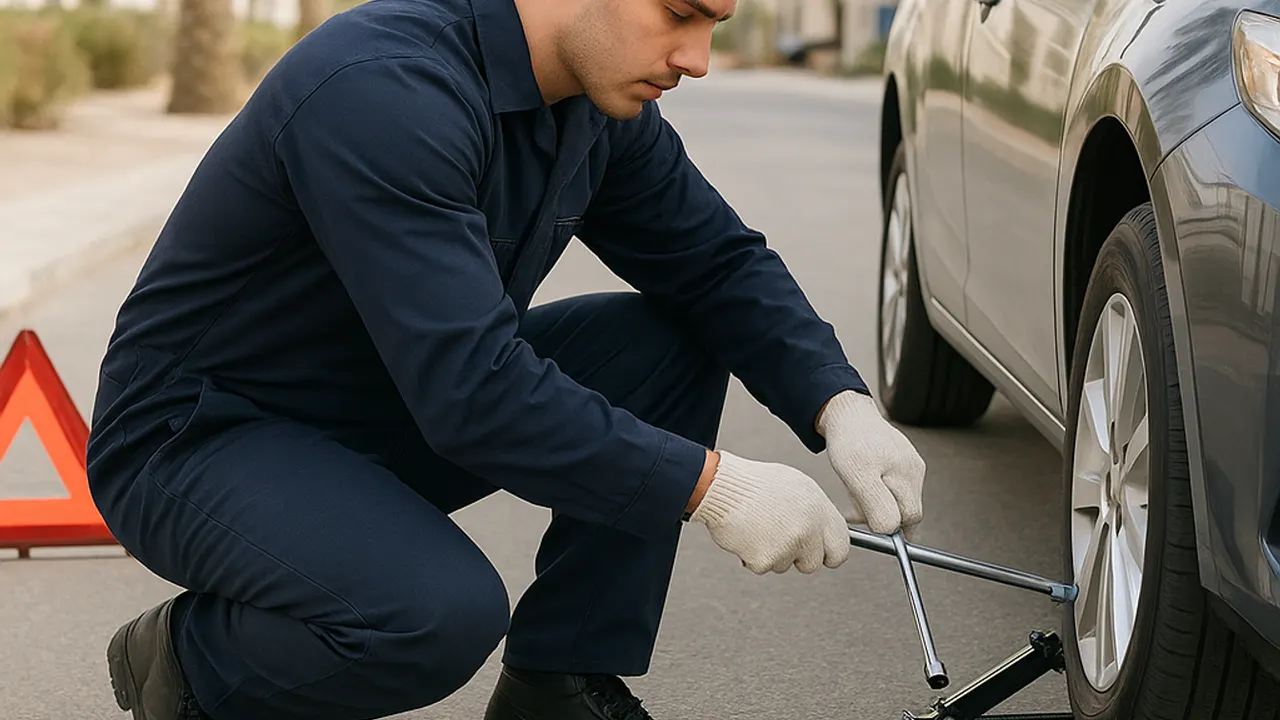
For drivers who want this handled properly the first time, our team offers Tyre Repair Al Ain across the city with pressure testing and leak detection done on the spot.
What a Slow Air Leak Actually Looks Like
A slow air leak in Al Ain almost never announces itself with a bang or a visible flat - it shows up as small, easy-to-ignore changes over several days. The most common slow air leak symptoms Al Ain drivers report to us are a tyre that looks slightly softer than the others in the morning, a TPMS light that comes on once a week and disappears after a top-up, and a car that pulls gently to one side on the E22 or Al Ain-Dubai Road.
Watch for these specific signs:
- One tyre needs air every 5-10 days while the other three hold pressure for months.
- A visible bulge or flat spot at the bottom of the tyre after the car has sat overnight in a parking lot.
- Uneven tread wear on the inner or outer edge of one tyre only.
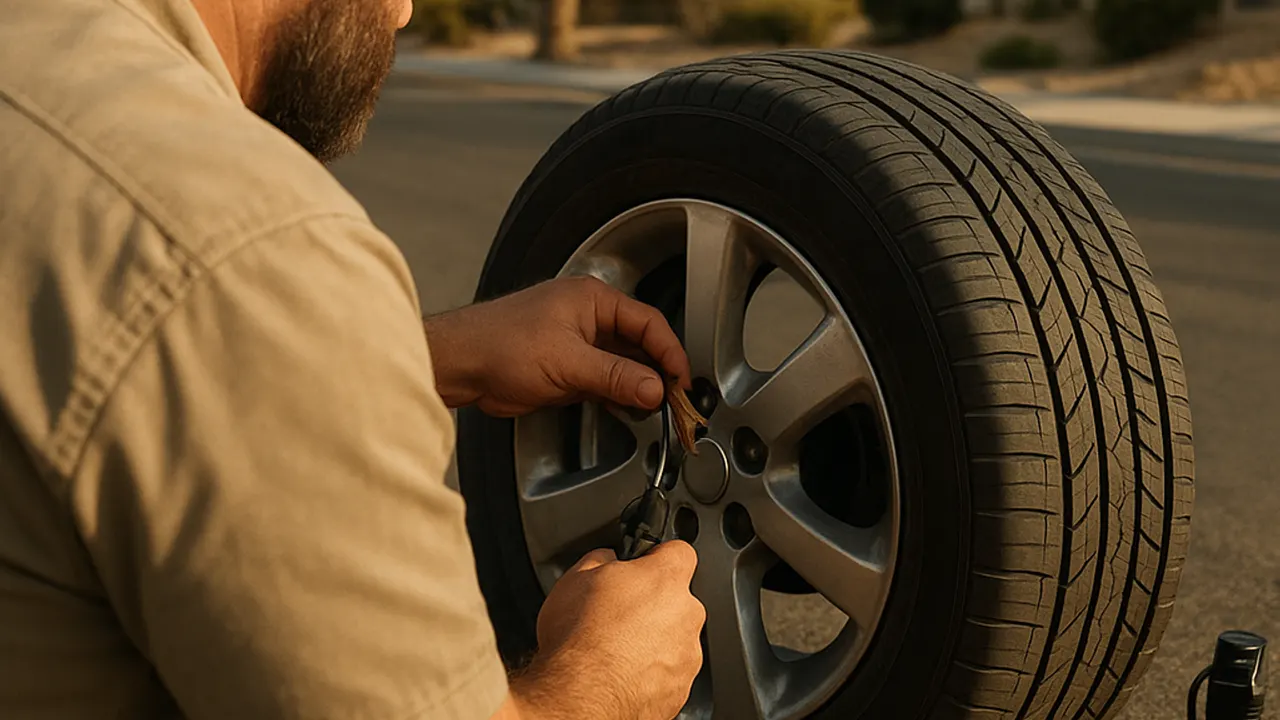
- A faint hissing sound when you press your ear close to the valve stem or rim edge.
- TPMS warning that returns within a week of resetting it.
If two or more of those apply, you are almost certainly dealing with a slow leak rather than normal pressure loss. Left alone, a slow leak turns into a sidewall failure - and a sidewall failure at 100 km/h on the Al Ain truck road is not something you want to experience.
Signs of a Punctured Tyre While Driving
The symptoms of a punctured tyre while driving in Al Ain usually appear suddenly and are hard to miss. You will feel a rhythmic thumping through the steering wheel or floor pan, the car will pull to the side of the damaged tyre, and the steering will feel heavier than normal within a kilometre or two.
Puncture signs Al Ain drivers describe most often:
- Steering pull to one side, especially under braking.
- Vibration through the wheel that gets worse as speed increases.
- A metallic clicking or tapping - that is usually the nail head striking the road each rotation.
- Visible object in the tread - a screw, nail, or piece of metal embedded in the rubber.
- Rapid pressure loss - 5 PSI or more within a few hours.
If you can see the nail or screw, do not pull it out. A nail left in place slows the air loss and gives the technician a clean hole to patch. Pulling it out on the roadside turns a 20-minute repair into a tow.
How to Check Tyre Pressure the Right Way
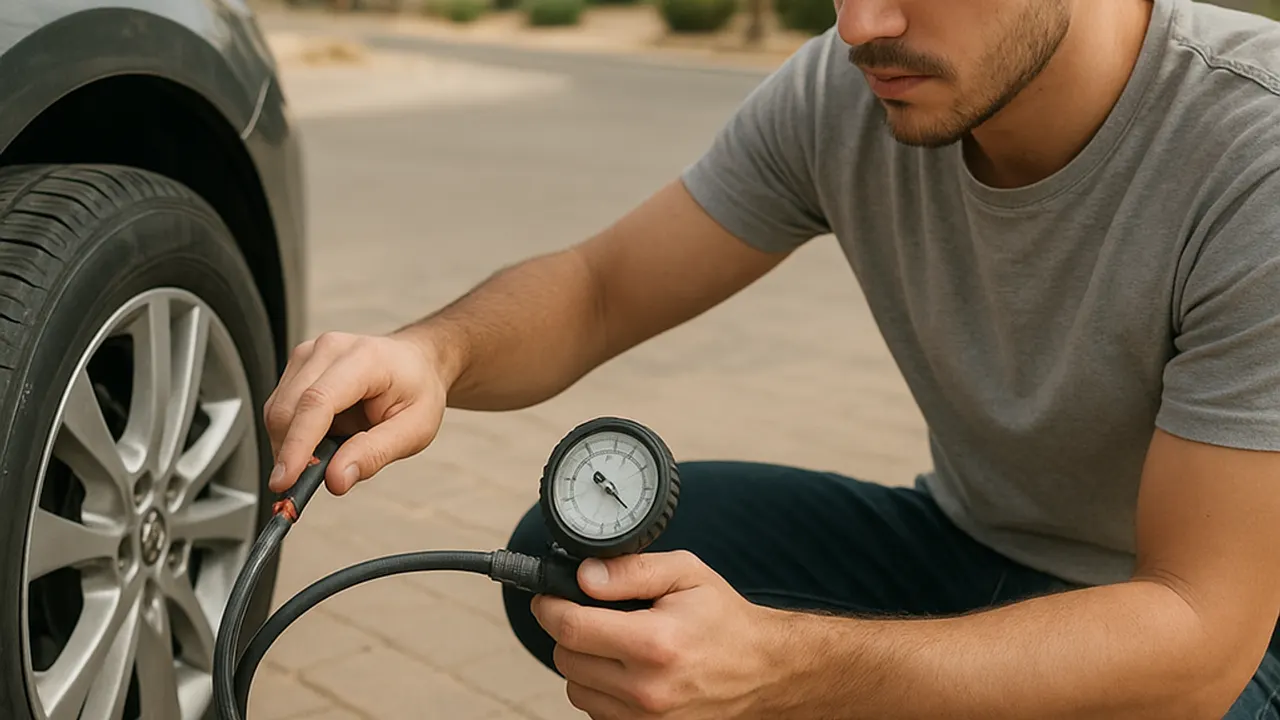
How to check tyre pressure in Al Ain is a question we get almost daily, and the answer is simpler than most drivers think: check it cold, check it monthly, and check it before any long drive. Tyres heat up as you drive, and a hot tyre can read 3-5 PSI higher than its true cold pressure - so a reading taken at a petrol station after 20 minutes of driving will lie to you.
Here is the routine we recommend:
- Check pressure in the morning, before the car has moved, or at least 3 hours after your last drive.
- Use a digital gauge, not the coin-operated one at the pump - those are often 2-4 PSI out.
- Check all four tyres plus the spare. The spare is the one everyone forgets.
- Compare the readings. If one tyre is 3 PSI or more below the others, that is your leak.
- Log the numbers in your phone. Two weeks of data tells you more than any single reading.
Recommended cold pressures for most vehicles on Al Ain roads sit between 32 and 38 PSI. Check the sticker inside your driver's door jamb - that is the manufacturer's number for your specific car, not a generic figure.
How to Find a Slow Air Leak in Your Tyre
How to find a slow air leak in your tyre comes down to three checks, in this order: the valve stem, the rim bead, and the tread surface. Nine out of ten slow leaks we trace in the workshop are at one of those three points.
The soapy water test
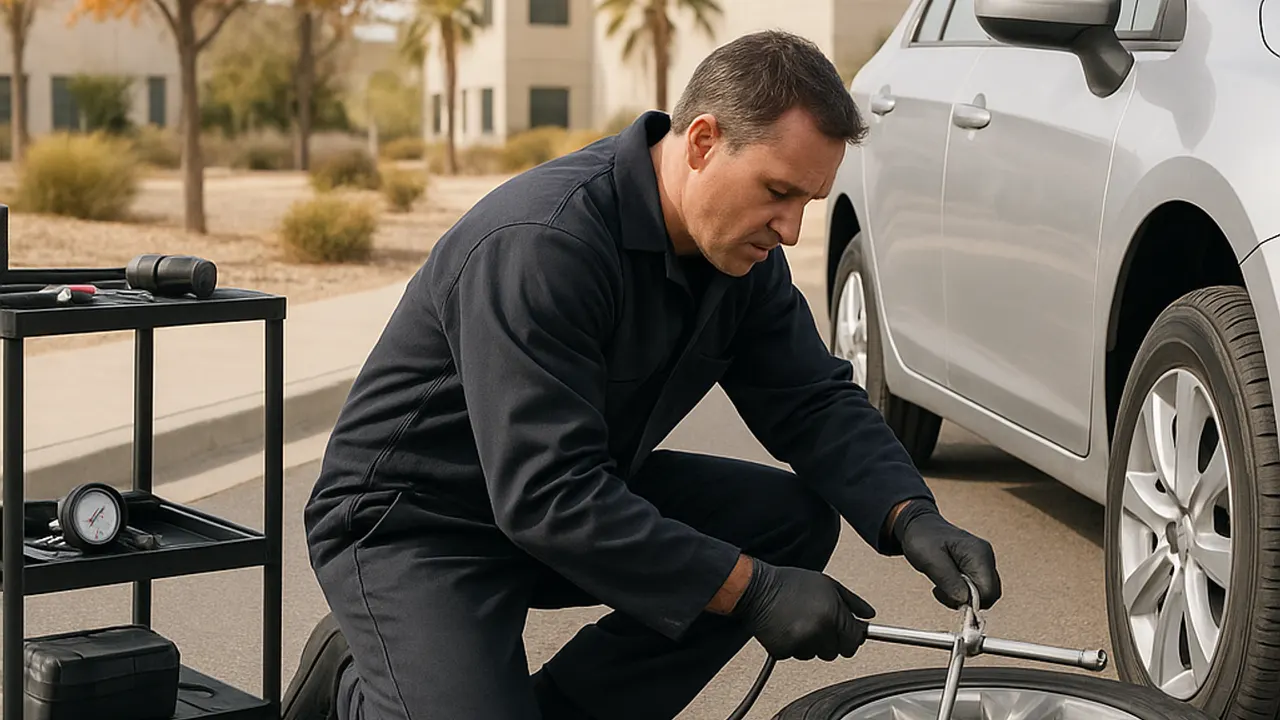
Mix a few drops of dish soap into a spray bottle of water. Inflate the tyre to full pressure, then spray the valve stem, the rim edge where the tyre meets the metal, and the full tread surface. Bubbles forming and growing means air is escaping there. This test catches 80% of slow leaks in under five minutes.
The valve stem check
Grab the valve stem and wiggle it gently. If it moves more than a millimetre or you hear a faint hiss, the rubber has perished. Al Ain heat destroys valve stems faster than almost anything else - we replace them as standard on every tyre we fit.
The rim bead check
Corrosion on alloy rims is the single biggest cause of slow leaks we see on cars that park outside. Look for white or grey crust along the inside edge of the rim. That crust lifts the tyre bead off the metal by a fraction of a millimetre - enough to lose 2 PSI a day.
If the leak is stubborn and you cannot find it with soapy water, our car tyre leak repair in Al Ain uses a full water-immersion tank that reveals leaks the roadside test misses.
Why Tyres Lose Air Faster in Al Ain
Tyres in Al Ain lose air faster than in most cities because of three local factors: extreme summer heat, fine desert dust, and long high-speed drives on the E22 and Al Ain-Abu Dhabi Road. Each one accelerates a different type of leak.
Summer temperatures here push road surface readings past 60°C, and that heat expands the air inside the tyre, stressing the valve stem and bead seal every single day. Over a season, that constant expansion and contraction works a small leak into a bigger one.
Desert dust is the second factor. Fine sand works its way into the bead area and slowly abrades the seal. Cars that regularly drive the Hili or Al Faqa routes pick up more of this than city-only vehicles.
Third, sustained highway speeds generate heat inside the tyre that a 20-minute city commute never does. A tyre already losing 2 PSI a day will lose 4 PSI a day on a weekly Abu Dhabi run. If your commute takes you through Tyre Repair Al Ain in Hili or along the eastern truck routes, check your pressures weekly, not monthly.
Common Mistakes Al Ain Drivers Make
The most expensive mistake we see is drivers topping up a leaking tyre for weeks instead of fixing it. A 2 PSI-per-day leak means you are adding air every 5-7 days, and each top-up masks the real problem until the tyre is beyond repair.
Other mistakes that cost Al Ain drivers money:
- Pulling the nail out on the roadside. Leave it in and drive slowly to a workshop.
- Using sealant foam as a permanent fix. It is a get-you-home product, not a repair. Sealant also makes the tyre harder to patch properly afterwards.
- Ignoring a TPMS light after a reset. If it comes back within a week, you have a leak.
- Replacing the tyre when a patch would do. A clean puncture in the central tread is repairable. A puncture in the sidewall is not.
- Mixing pressures across the axle. A 4 PSI difference between left and right tyres will wear both unevenly.
One more: driving on a tyre that has been run flat, even briefly. Once the sidewall has been crushed, the internal structure is compromised and no repair will make it safe again.
When to Call a Professional
Call a professional when a tyre loses 3 PSI or more in a week, when you can see an object in the tread, or when the sidewall shows any bulge, crack, or scuff. Those are the three situations where a home fix either will not work or will not be safe.
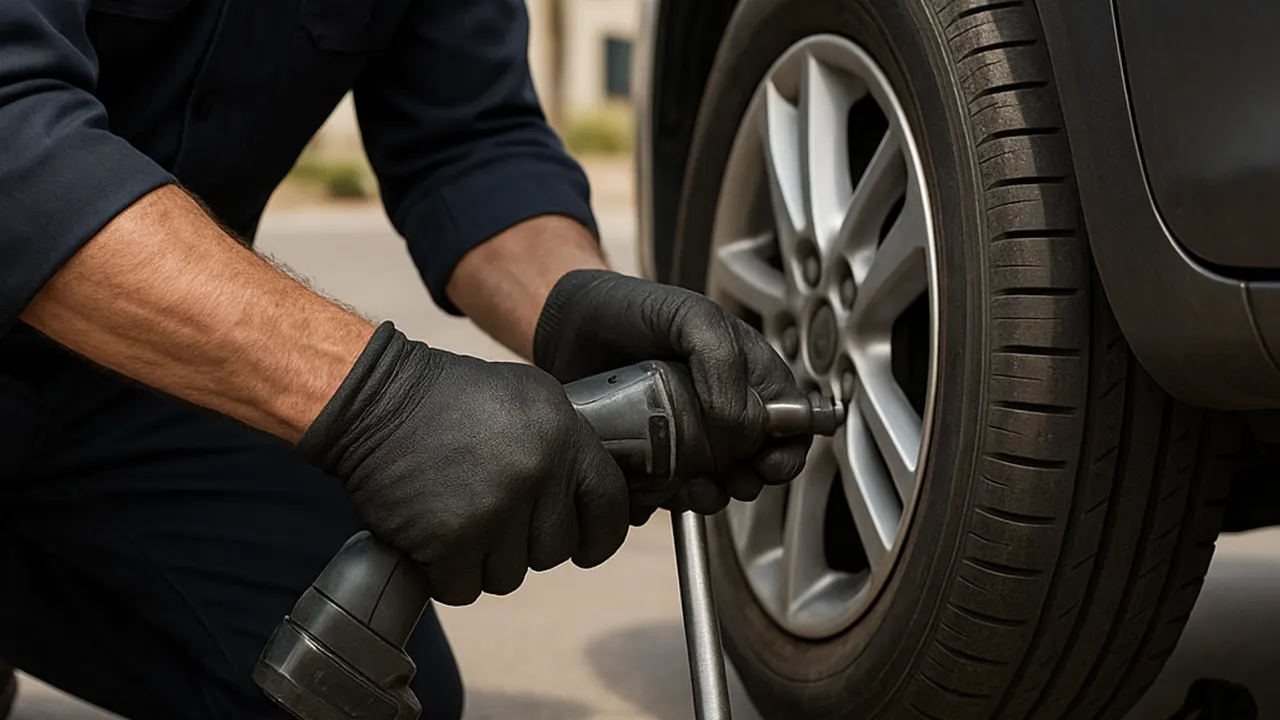
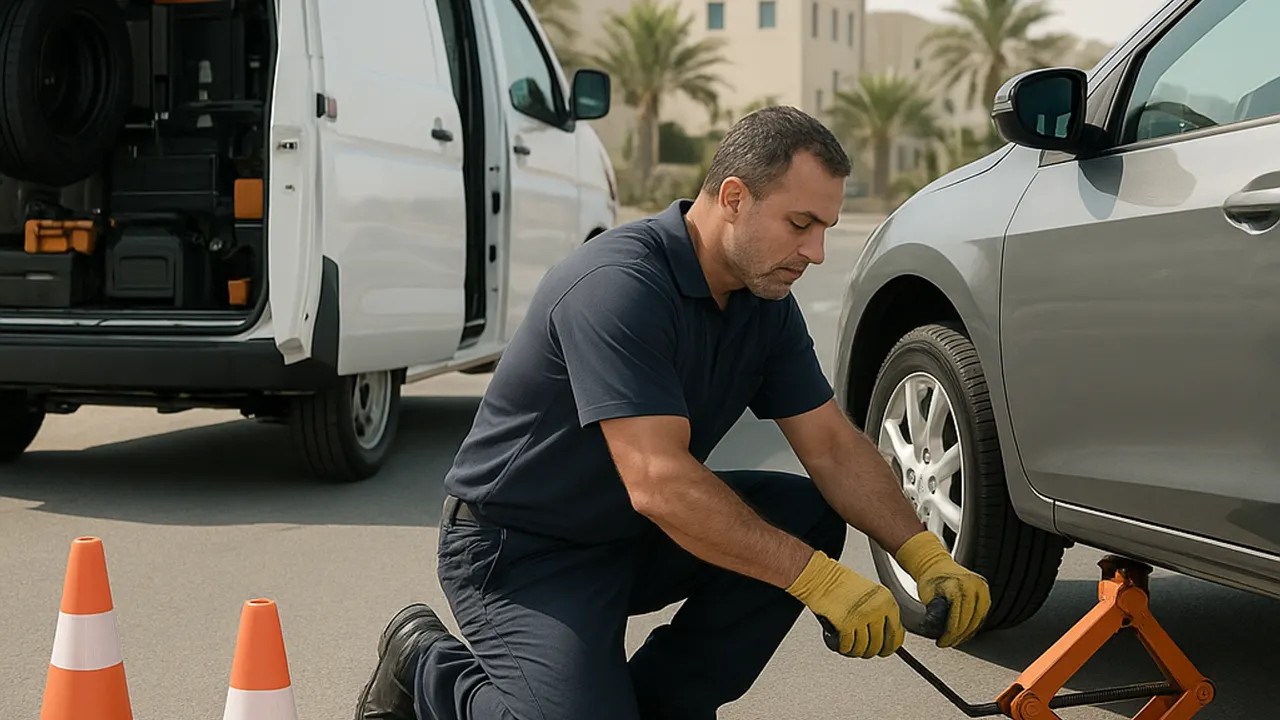
We handle puncture and slow leak repairs across Al Ain every day. Our technicians carry plug and patch kits, replacement valve stems, bead sealant, and a water-immersion leak tank, so we can diagnose and fix most leaks in a single visit. If the tyre is not repairable, we will tell you straight and fit a replacement on the spot.
We also cover the northern and eastern neighbourhoods - drivers in Al Muwaiji tyre repair Al Ain and around Al Jimi get the same response time as the city centre.
Frequently Asked Questions
How can I tell if my tyre has a slow puncture in Al Ain?
Check your pressure cold, then again 12 hours later. A drop of 1-3 PSI over that window is a slow puncture. A drop of 5 PSI or more is a full puncture. A soapy water spray on the valve stem and rim edge will usually show bubbles at the leak point.
Why does my tyre keep losing air in Al Ain?
The three most common causes here are a perished valve stem, corrosion on the alloy rim bead, and a small nail or screw in the tread. Al Ain's summer heat and fine desert dust accelerate all three. A water-immersion test finds the leak in minutes.
What are the signs of a punctured tyre in Al Ain?
Steering pull to one side, vibration through the wheel, a rhythmic thumping at low speed, and pressure loss of 5 PSI or more within a few hours. If you can see a nail or screw in the tread, that is a puncture - leave it in and drive to a workshop.
Should I repair or replace a tyre with a slow leak in Al Ain?
Repair it if the leak is at the valve stem, rim bead, or a clean hole in the central tread - that is a 20-30 minute fix. Replace it if the puncture is in the sidewall, the tyre has been run flat, or the tread is below 1.6 mm.
How often should I check tyre pressure in Al Ain?
Every two weeks in summer and monthly the rest of the year. If you drive the E22 or Al Ain-Abu Dhabi Road weekly, check every week. A single underinflated tyre can cost you 3-5% in fuel and wear out 30% faster.
Get Help with Tyre Repair Al Ain in Al Ain
If your tyre is losing air and you cannot trace the leak, we will find it, fix it, and pressure-test it before you drive away. Our team covers every neighbourhood in Al Ain with same-day puncture and slow leak repairs.
Call us on 971 50 757 1372 and we will get your car back on the road today.