How to Prevent Frequent Tyre Punctures and Slow Air Leaks in Your Car
Frequent punctures and slow leaks in Al Ain are usually preventable. Learn the pressure checks, driving habits, and maintenance routines that keep your tyres sealed.
You can prevent most tyre punctures in Al Ain by checking your tyre pressure every two weeks, avoiding debris on the road, and getting small leaks repaired before they become blowouts. The city's mix of sand, construction waste, and extreme heat makes tyres work harder than in most places, so a little routine care goes a long way.
How to prevent tyre punctures in Al Ain is really a question about habits. We'll walk you through the pressure checks, driving adjustments, and maintenance routines that keep your tyres sealed and your car off the roadside. If you already have a slow leak, we'll show you when to fix it yourself and when to call us.
Why Al Ain Roads Cause More Punctures Than You Expect
Al Ain's roads expose tyres to conditions that accelerate wear and puncture risk. Summer asphalt temperatures regularly exceed 60°C, which softens rubber and makes it more vulnerable to sharp objects. The city also has ongoing construction in areas like Al Jimi and Al Muwaiji, where screws, nails, and metal fragments end up on the road.
Sand and fine dust work their way into tyre beads and valve cores, causing slow air leaks that you might not notice for weeks. If you drive near construction sites or unpaved edges, your tyres pick up debris that can work itself into the tread over time. That's why a simple Tyre Repair Al Ain check every few months can catch small issues before they strand you.
We see the same pattern across the city: drivers who park on sand or gravel get more bead leaks, while those who commute on highways pick up more tread punctures. Knowing your daily route helps you anticipate the risks.
How Often Should You Check Tyre Pressure in Al Ain?
Check your tyre pressure at least once every two weeks, and always before a long drive. In Al Ain's heat, tyres can lose 1-2 PSI per month naturally, and a slow leak can double that rate. A tyre that's 5 PSI low runs hotter and wears faster, which increases the chance of a blowout.
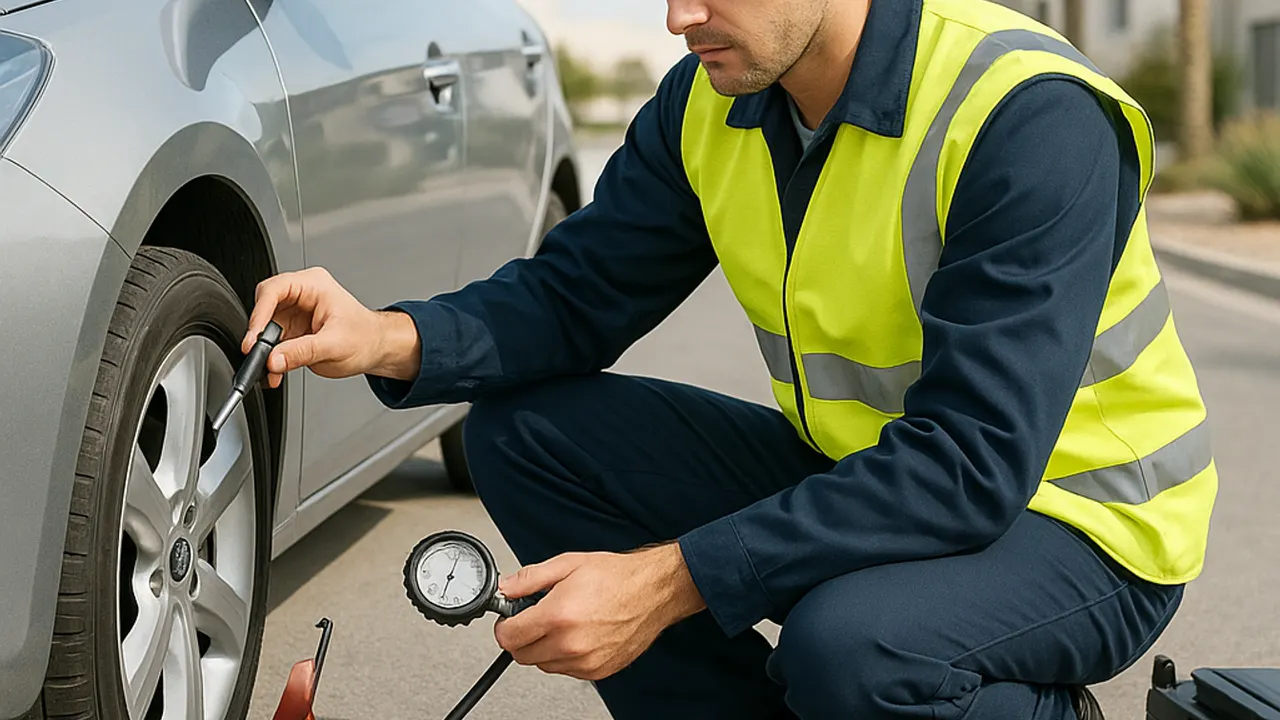
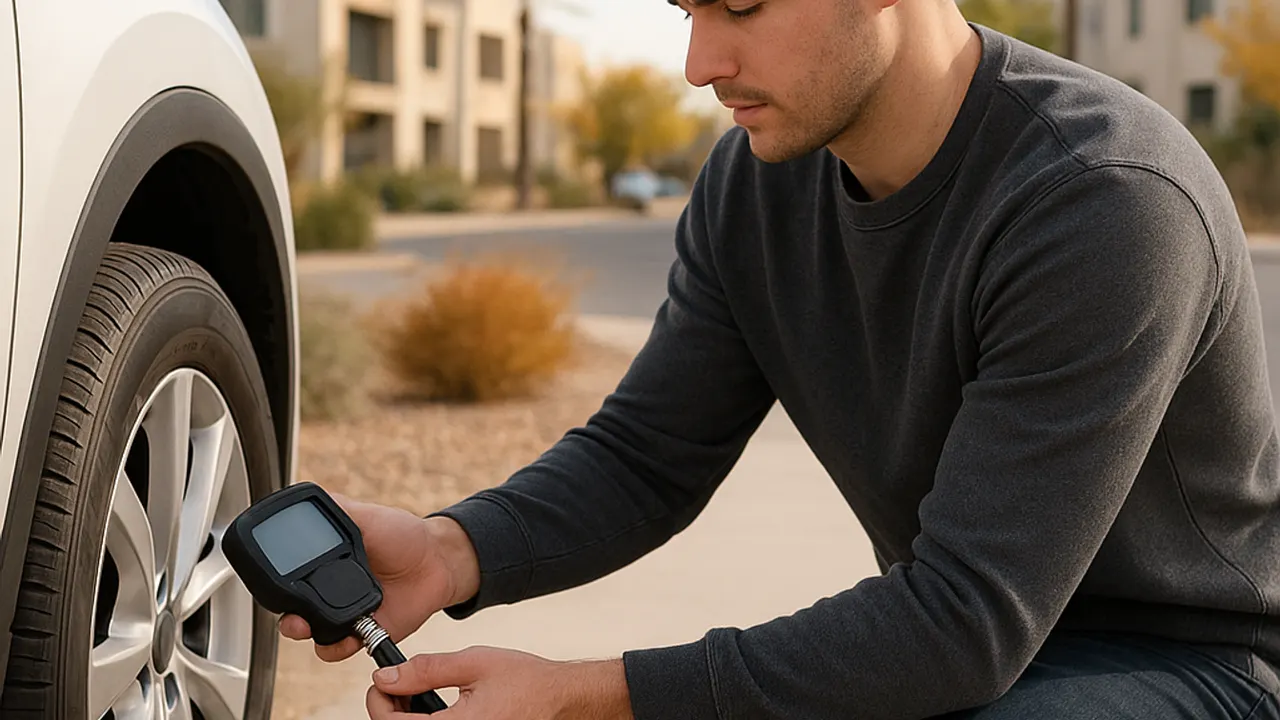
Use a quality digital gauge and check when the tyres are cold - first thing in the morning or after the car has been parked for at least three hours. The recommended pressure for most cars is between 32 and 36 PSI, but check your owner's manual or the sticker on the driver's door jamb. For SUVs and 4x4s common in Al Ain, it's often 36-40 PSI.
Don't rely on visual inspection. A tyre can be 10 PSI low and still look fine. If you're checking monthly instead of biweekly, you're giving slow leaks time to become flat tyres. We recommend setting a reminder on your phone for the 1st and 15th of every month.
The Tyre Maintenance Checklist for Al Ain Drivers
This tyre maintenance checklist for Al Ain drivers covers the essentials that prevent most punctures and slow leaks. Run through it every two weeks - it takes less than 15 minutes.
- Check pressure on all four tyres plus the spare. Use a digital gauge, not a petrol station air machine that may be inaccurate.
- Inspect tread depth. Use a tread depth gauge or the 1-dirham coin test. Legal minimum is 1.6mm, but for Al Ain heat, replace at 3mm.
- Look for embedded objects. Nails, screws, and glass fragments can sit in the tread for weeks before causing a leak.
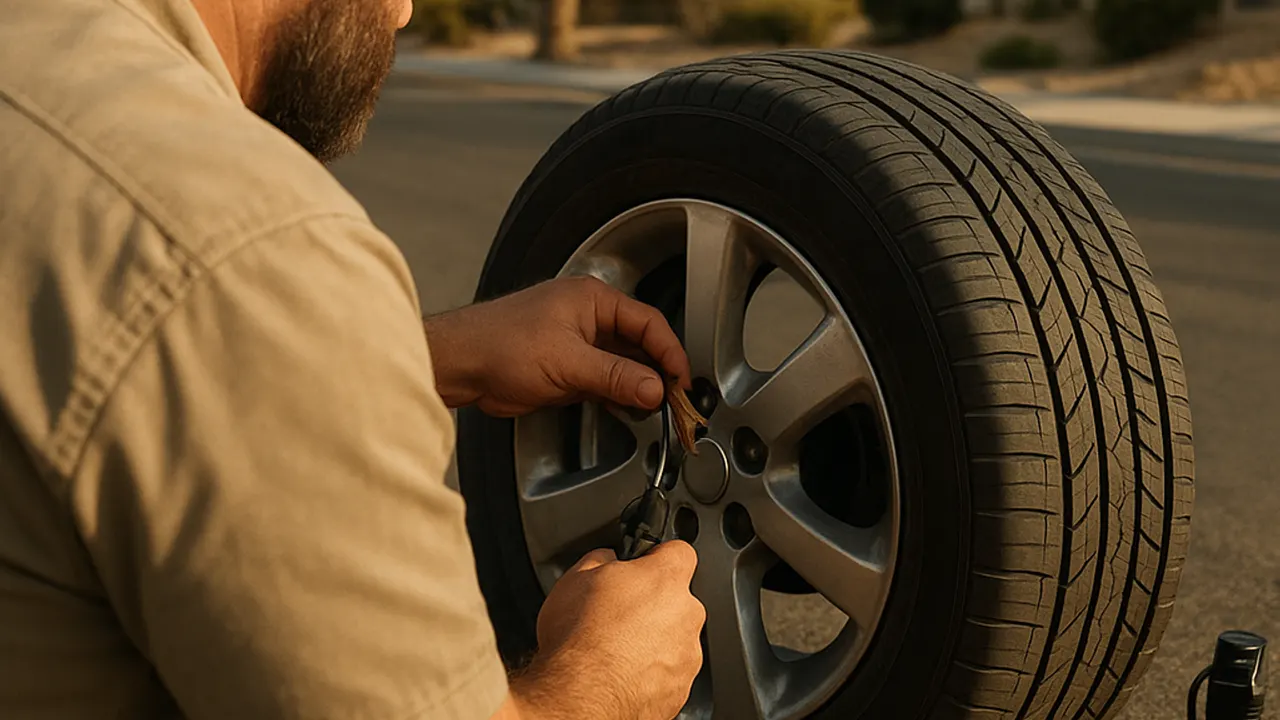
- Check valve caps. Missing caps let dust in, which damages the valve core and causes slow leaks.
- Examine sidewalls for cracks or bulges. Heat damage shows up as small cracks; bulges mean internal cord damage.
- Rotate tyres every 10,000 km. This evens out wear and helps you spot uneven patterns early.
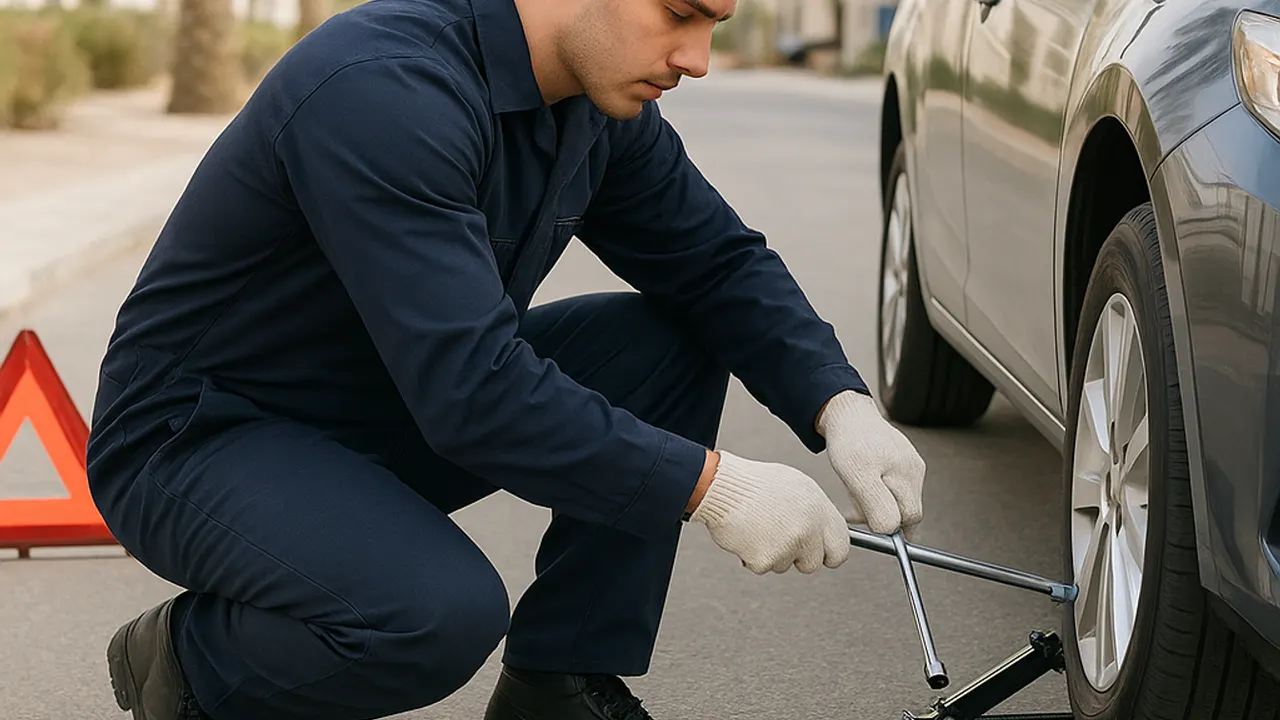
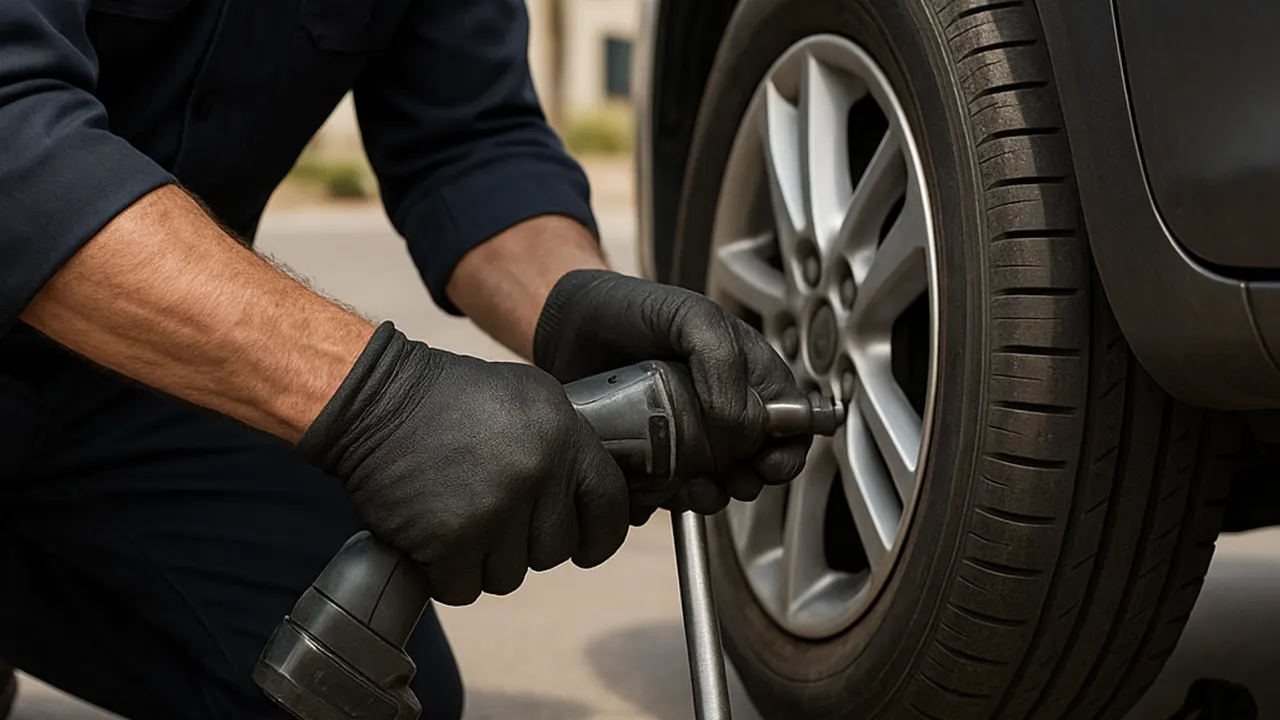
If you notice any of these issues, don't wait. A small puncture repair costs far less than a new tyre or a tow. Our team handles tyre puncture repair in Al Ain for nails, screws, and small cuts - usually in under 30 minutes.
Driving Habits That Prevent Flat Tyres in Al Ain
How you drive matters as much as how you maintain your tyres. In Al Ain, avoid driving close to construction sites where debris falls from trucks. Keep a safe distance from the kerb when parking - scraping the sidewall against concrete weakens the tyre and can cause a slow leak at the bead.
When you see broken glass or metal on the road, don't swerve suddenly. Slow down gently and steer around it if safe. Hitting a pothole at speed can pinch the tyre against the rim, causing a bulge or a tear that leads to a flat.
In summer, try to park in shade. Direct sun on hot asphalt raises tyre temperature and pressure, and repeated heat cycles age the rubber faster. If you must park on sand or gravel, check your tyres for embedded debris before your next drive.
We also recommend avoiding overload. Carrying more weight than your tyres are rated for increases sidewall flex and heat, which makes them more vulnerable to punctures. Check your tyre placard for the maximum load.
Why Do My Tyres Keep Getting Punctured in Al Ain?
If your tyres keep getting punctured in Al Ain, the cause is usually one of four things: driving through construction zones, parking on debris-strewn ground, worn tread that exposes the casing, or a previous repair that wasn't done properly. Al Ain's roads see a lot of building activity, and nails and screws from pallets and scaffolding are common.
Another factor is tyre age. Rubber hardens over time, especially in desert heat. A tyre older than five years may have tiny cracks that let air escape slowly, even without a visible puncture. Check the DOT code on the sidewall - the last four digits tell you the week and year of manufacture.
If you've had multiple punctures in the same tyre, the problem might be a damaged wheel or a persistent leak at the valve stem. Our car tyre leak repair in Al Ain service includes a full inspection of the tyre, valve, and bead to find the real source.
Common Mistakes That Cause Slow Air Leaks
The most common mistake we see is ignoring a slow leak until it becomes a flat. A tyre losing 2-3 PSI per week might take a month to look visibly low, but during that time it's running hot and wearing unevenly. By the time you notice, the tyre may be damaged beyond repair.
Other mistakes include:
- Using fix-a-flat sealant as a permanent repair. It's a temporary fix that can corrode the wheel and make a proper repair harder.
- Over-tightening valve caps. This can damage the valve core and cause a leak.
- Driving on a visibly flat tyre. Even a short distance can destroy the sidewall and require a new tyre.
- Skipping the spare. A flat spare is useless when you need it most.
- Ignoring uneven wear. It signals alignment or suspension problems that lead to more punctures.
If you're in Al Jimi or Al Muwaiji, we often see bead leaks from sand getting between the tyre and rim. A proper cleaning and reseal fixes it. For drivers in Tyre Repair Al Ain in Al Jimi, we offer mobile service so you don't have to drive on a leaking tyre.
When to Call a Professional
Call a professional when a tyre loses more than 5 PSI per week, when you see a nail or screw in the tread, or when the sidewall has a bulge or cut. These are signs of damage that a DIY plug kit can't safely fix. Driving on a damaged tyre risks a blowout, especially at highway speeds.
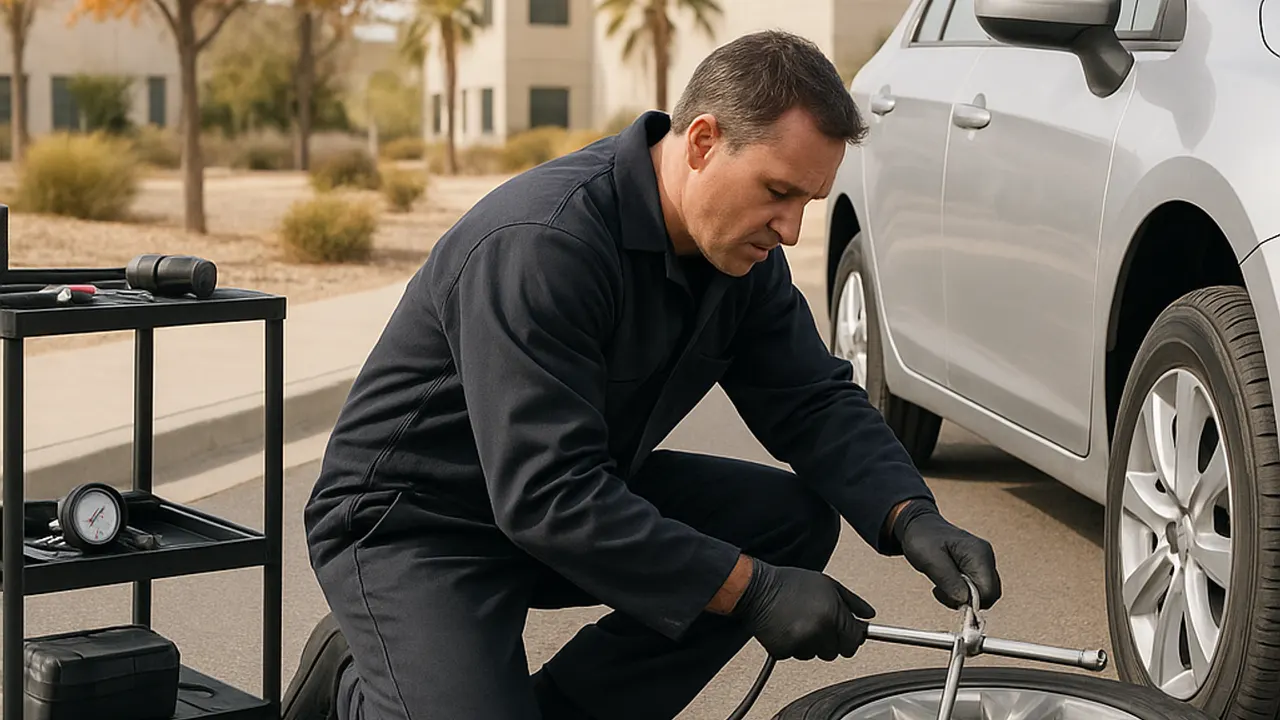
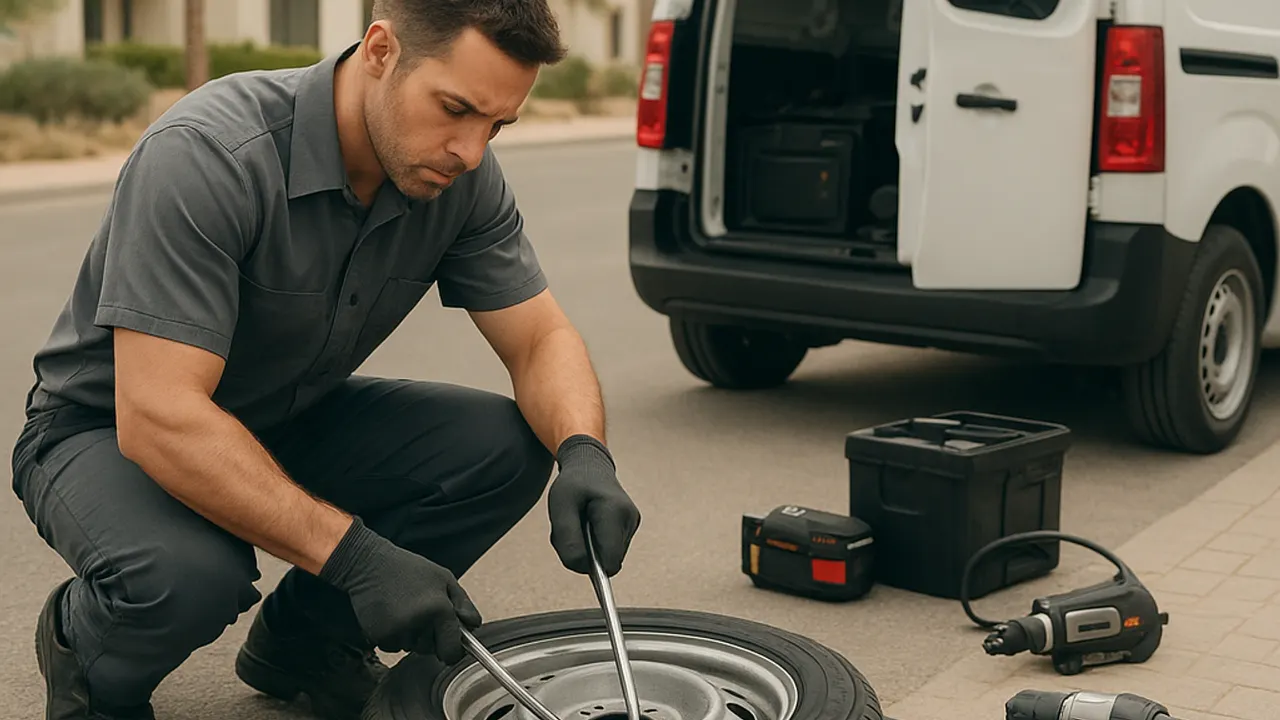
We handle tyre repairs across Al Ain, including mobile service to your home or office. If you're not sure whether a leak is serious, give us a call - we'll talk you through it. For drivers in Hili and Al Sarooj, we can often come to you the same day. Our flat tyre repair in Al Ain service covers everything from simple punctures to valve replacements.
Don't wait for a flat. A quick repair now is cheaper and safer than a roadside emergency later.
Frequently Asked Questions
How can I prevent tyre punctures in Al Ain?
Check pressure every two weeks, avoid driving near construction debris, and repair small leaks immediately. Keep your tread above 3mm and rotate tyres every 10,000 km. Parking in shade and avoiding kerb scrapes also helps.
Why do my tyres keep getting punctured in Al Ain?
Al Ain's construction zones and sandy roads leave nails, screws, and glass on the surface. Worn tread and aged rubber make it easier for objects to penetrate. If punctures are frequent, get your wheels and alignment checked.
How often should I check tyre pressure in Al Ain?
Every two weeks, and always before long trips. In summer, check weekly because heat increases natural pressure loss. Use a digital gauge when tyres are cold for the most accurate reading.
What causes frequent slow leaks in Al Ain?
Slow leaks usually come from valve cores, bead seals, or small punctures. Sand and dust in the bead, damaged valve caps, and corroded rims are common in Al Ain. A professional leak test finds the exact source.
Can I repair a puncture myself in Al Ain?
You can use a plug kit for a temporary fix, but it's not a permanent repair. For safety, have a professional patch the tyre from the inside. We offer mobile puncture repair across Al Ain.
Get Help with Tyre Repair Al Ain in Al Ain
If you're dealing with a slow leak or a puncture, our team at Al Ain Tyre Rescue is ready to help. We come to you, fix the problem properly, and get you back on the road.
Call us now at 971 50 757 1372 to schedule a repair or ask about our mobile service.